
G A N G A
G A N G A
i am ganga and i make electronic and acoustic music with a twist. i have a love for trees and meditate every morning. Good to see you here!
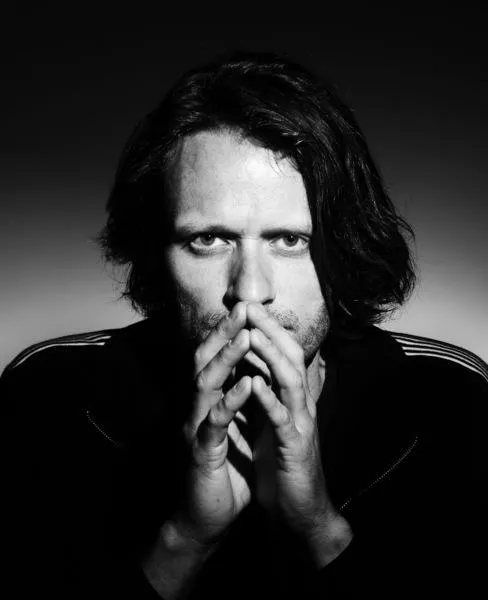
The story about Massive Attack, Portishead
The Orb, Erik Satie, Thievery Corporation & Brian Eno.
From Bristol Basements to Global Chill
If you’ve ever found yourself obsessing over a bassline that feels like a slow heartbeat, you’ve likely at some point stepped into the world of Trip-Hop. Emerging from the foggy, multicultural streets of Bristol, UK, in the early 1990s, this genre redefined "cool" by blending hip-hop aesthetics with jazz, dub, pop and electronica.
The Bristol Big Three: Massive Attack, Portishead, and Tricky
The story of Trip-Hop starts with the "Bristol Sound." Massive Attack is widely credited as the architects of the genre. Their 1991 masterpiece Blue Lines took the grit of street soul and slowed it down to a hypnotic crawl. They proved that electronic music didn't have to be for the dancefloor—it could be for the living room.
Shortly after, Portishead brought a cinematic, noir-inspired edge to the scene. With Beth Gibbons’ ghost-like vocals and Geoff Barrow’s dusty vinyl scratches, their debut Dummy felt like a soundtrack to a 1950s spy film directed by a hip-hop producer.
Then came Tricky. A former collaborator of Massive Attack, Tricky’s solo work (like Maxinquaye) pushed the boundaries even further. His mumble-rap style and claustrophobic, experimental beats added a layer of "darkness" to the genre that remains unmatched.
Expanding the Horizon: The Orb and Moloko
While Bristol was the heart, the "downtempo" movement quickly expanded. The Orb took the psychedelic elements of ambient house and merged them with Trip-Hop rhythms, creating sprawling sonic landscapes that felt like a journey through space.
As the 90s progressed, the genre began to flirt with pop. Moloko (featuring Róisín Murphy) brought a quirky, eccentric energy to the scene. Tracks like "Fun for Me" showed that Trip-Hop could be playful, stylish, and avant-garde all at once, bridging the gap between the underground and the mainstream.
The Global Chill: Thievery Corporation
By the late 90s and early 2000s, Trip-Hop had crossed the Atlantic. Thievery Corporation, based in Washington D.C., became the gold standard for "Global Chill." By infusing Trip-Hop with bossa nova, Indian sitars, and Jamaican dub, they proved that the genre wasn't just a British phenomenon—it was a universal language of relaxation.
Why It Still Matters Today
Trip-Hop paved the way for everything from Lo-fi hip-hop to modern Alt-R&B. It taught us that music doesn't always have to shout to be Loud and fast; sometimes, the most powerful statement is made in the quiet, atmospheric spaces between slow beats.
If you’ve ever found yourself obsessing over a bassline that feels like a slow heartbeat, you’ve likely stepped into the world of Trip-Hop. Emerging from the foggy, multicultural streets of Bristol, UK, in the early 1990s, this genre redefined "cool" by blending hip-hop aesthetics with jazz, dub, pop and electronica.
The Bristol Big Three: Massive Attack, Portishead, and Tricky
The story of Trip-Hop starts with the "Bristol Sound." Massive Attack is widely credited as the architects of the genre. Their 1991 masterpiece Blue Lines took the grit of street soul and slowed it down to a hypnotic crawl. They proved that electronic music didn't have to be for the dancefloor—it could be for the living room.
Shortly after, Portishead brought a cinematic, noir-inspired edge to the scene. With Beth Gibbons’ ghost-like vocals and Geoff Barrow’s dusty vinyl scratches, their debut Dummy felt like a soundtrack to a 1950s spy film directed by a hip-hop producer.
Then came Tricky. A former collaborator of Massive Attack, Tricky’s solo work (like Maxinquaye) pushed the boundaries even further. His mumble-rap style and claustrophobic, experimental beats added a layer of "darkness" to the genre that remains unmatched.
Expanding the Horizon: The Orb and Moloko
While Bristol was the heart, the "downtempo" movement quickly expanded. The Orb took the psychedelic elements of ambient house and merged them with Trip-Hop rhythms, creating sprawling sonic landscapes that felt like a journey through space.
As the 90s progressed, the genre began to flirt with pop. Moloko (featuring Róisín Murphy) brought a quirky, eccentric energy to the scene. Tracks like "Fun for Me" showed that Trip-Hop could be playful, stylish, and avant-garde all at once, bridging the gap between the underground and the mainstream.
The Global Chill: Thievery Corporation
By the late 90s and early 2000s, Trip-Hop had crossed the Atlantic. Thievery Corporation, based in Washington D.C., became the gold standard for "Global Chill." By infusing Trip-Hop with bossa nova, Indian sitars, and Jamaican dub, they proved that the genre wasn't just a British phenomenon—it was a universal language of relaxation.
Why It Still Matters Today
Trip-Hop paved the way for everything from Lo-fi hip-hop to modern Alt-R&B. It taught us that music doesn't always have to shout to be Loud and fast; sometimes, the most powerful statement is made in the quiet, atmospheric spaces between slow beats.
I hope you enjoyed this deep dive! Get more
hidden Trip-Hop and downtempo
gems delivered to your inbox.
Sign up below and get the unreleased track right away!
As well as more free Ganga stuff, early access,
special versions of songs and other goodies.
Hope to see you inthere :-)
you finally came!
good to see you.
i am ganga and i make electronic and acoustic music.
i have a love for trees, meditate every morning
and ever since i started releasing music in 2003,
making music has been my way of staying sane.
well...kind of sane anyway.
since then my tracks has streamed
more than 20 mio. times
and i´ve released 7 physical albums.
you’re probably here because you like music,
great!
welcome! its nice to meet you :-)
I want to give you exclusive access to an unreleased track so you can have a little mellow time in the hammock or a private dance. just sign up for the newsletter below and the track is yours to keep. it´s not for sale anywhere!
Then you´ll have access to more free stuff, early access, special versions of songs and other goodies. hope to see you inthere :-)
I want to give you exclusive access to an unreleased track so you can have a little mellow time in the hammock or a private dance. just sign up for the newsletter below and the track is yours to keep. it´s not for sale anywhere!
Then you´ll have access to more free stuff, early access, special versions of songs and other goodies. hope to see you inthere :-)
From Erik Satie to Selected Ambient Works
From Erik Satie to Selected Ambient Works
How Aphex Twin redefined the sound of stillness
When we think of Richard D. James, better known as Aphex Twin, our minds often drift to chaotic breakbeats, distorted acid basslines, and unsettling music videos. But beneath the mechanical aggression lies a parallel universe of profound serenity.
While his uptempo catalog defined a generation of rave culture, it is his contribution to Ambient music that arguably holds the most emotional weight. Let’s dive into how Aphex Twin transformed background music into a deeply personal foreground experience.
The Evolution of Ambient: From Furniture to Feeling
Before we can understand James’ impact, we have to look at where the genre started. In the early 20th century, Erik Satie proposed "Furniture Music"—sound meant to be part of the room, not the focus. Decades later, Brian Eno coined the term "Ambient," describing it as music that must be "as ignorable as it is interesting."
By the early 90s, the electronic scene was craving something different. The "chill-out" rooms of clubs and raves needed a soundtrack and here comes ambient music and takes center stage.
Selected Ambient Works 85-92: The Melodic Dream
In 1992, Aphex Twin released Selected Ambient Works 85-92. Unlike the colder, and perhaps more academic ambient of the past, this was warm, hiss-filled, and melodic. Much of it was recorded on cassette tapes using home-built gear. This gave tracks like Xtal and Ageispolis a lo-fi, nostalgic glow. Even without vocals, the music felt like a conversation. It wasn't just "soundscapes"; it was electronic folk music for a digital age.
The Alchemy of Sound: Modified Gear and Tape Hiss
One of the most fascinating aspects of Aphex Twin’s ambient period is the physicality of the sound. This wasn't made with modern, clean software; it was birthed from a DIY ethos that redefined electronic music.
Hand-Built Circuits and "Frankenstein" Synths
Richard D. James is famous for his claim that he built or heavily modified his own synthesizers. By opening up his gear and rewiring the circuits, he was able to coax out textures that no "off-the-shelf" instrument could produce. This gave his ambient tracks a unique sonic fingerprint—oscillators that drift slightly out of tune, creating a haunting, organic feel that mimics human breathing f.ex.
The Magic of Magnetism (Tape Saturation)
The warmth you hear in his early work is the sound of cassette tape. By recording directly to standard decks, James introduced "wow and flutter" (tiny pitch fluctuations) as you hear it on normal cassette tapes and reel to reel players. When you listen to his early ambient tracks, you aren't just hearing a synth; you’re hearing the of sound of magnetic tape passing over a metal head.
SAW Volume II: Diving into the Void
If the first volume was a dream, Selected Ambient Works Volume II (1994) was a landscape. Here, James stripped away almost all percussion.
This album is a masterclass in texture over tempo. Tracks like #3 (Rhubarb) or #13 (Blue Calx) don't ask for your attention; they surround you. It is music that feels like weather—sometimes unsettling, often beautiful, and always immersive. He moved away from "songs" and toward "spaces" you could inhabit.
Why This Music Matters Today
In our era of constant noise, the ambient works of Aphex Twin offer a place to rest your mind.
While his high-speed techno tracks showcase his technical skills, his ambient works reveal his vulnerability as a composer. It’s a reminder that sometimes the most powerful statement a musician can make is one of silence, repetition, and subtle shifts in tone.
Sound of Stillness?
Aphex Twin’s ambient discography is a vast world to get lost in. Whether it’s the hazy nostalgia of his early tapes or the haunting textures of his later work, there is a frequency for everyone.
I find the music from this period extremely grounding and relaxing.
Oh you´re till around. Great.
I hope you enjoyed this.
Consider signing up below and get the '
unreleased track right away!
There´s also free Ganga stuff, early access to new music,
special versions of songs and other goodies. Hope to see you inthere :-)
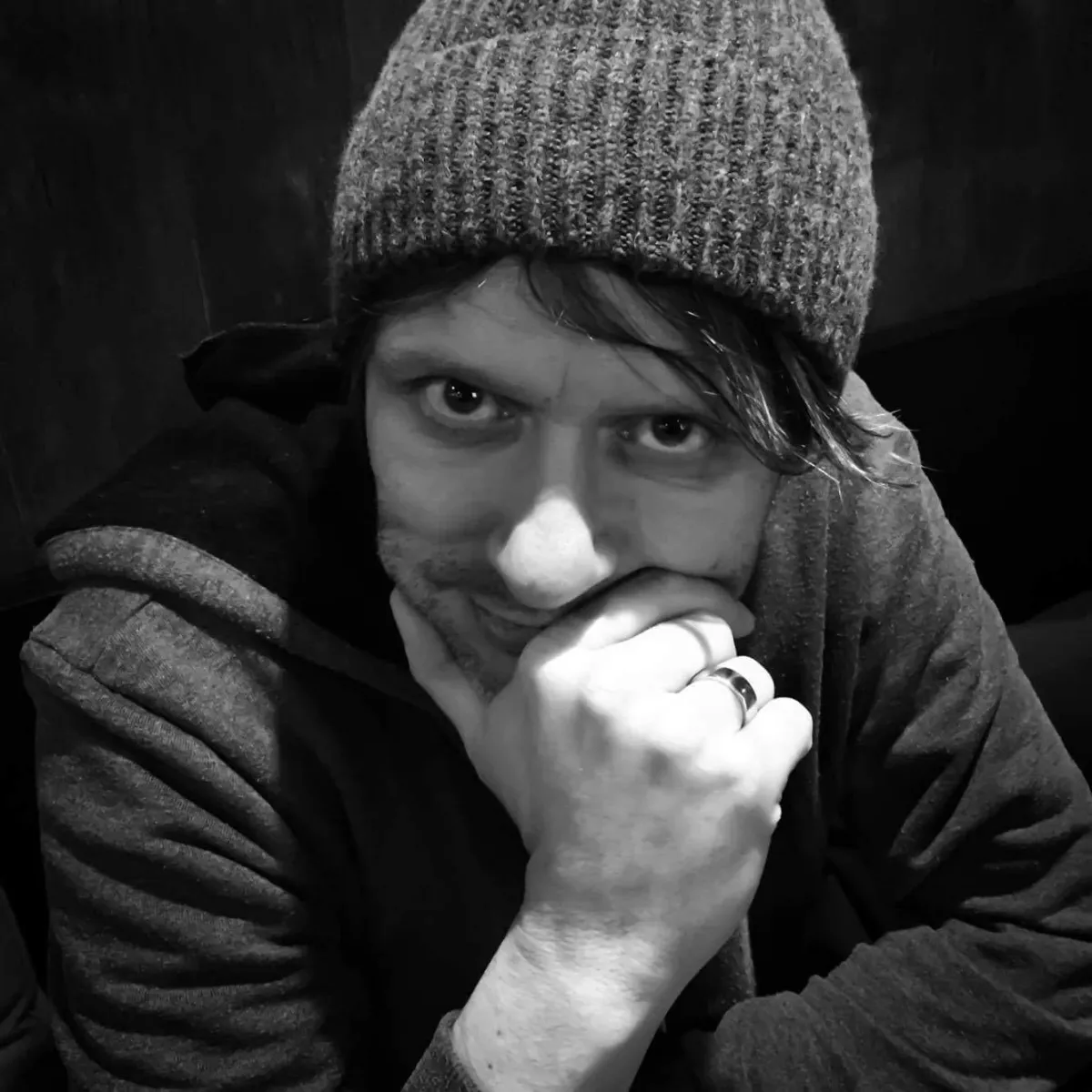
Brian Eno - Ambient music - Non music
In the mid-1970s, popular music was undergoing a tectonic shift. While punk was stripping rock down to its jagged, aggressive bones and disco was elevating the rhythmic pulse of the dancefloor, a quiet revolution was brewing in the mind of a self-described non-musician. Brian Eno, a man who had already helped redefine glam rock with Roxy Music and pushed the boundaries of art-pop with his early solo albums, was about to birth a genre that would redefine how humanity interacts with sound.
The impact of Brian Eno on ambient music is not merely a matter of aesthetic preference; it is a fundamental shift in the ontology of listening. Before Eno, music was largely something one listened to with focused intent. After Eno, music became something one could inhabit.
The most famous origin story in electronic music history occurred in early 1975. After being struck by a car, Brian Eno was confined to his bed, immobile and recovering. A friend, Judy Nylon, visited him and brought a record of 18th-century harp music. She put the record on, set the volume to an almost imperceptible level, and left.
Eno, unable to move to turn the volume up, lay there as the music began to play. One speaker was failing, and the rain outside was drumming against the windowpane. The harp notes were barely audible, occasionally disappearing into the environmental noise of the room. Initially frustrated, Eno soon underwent a profound cognitive shift. He realized that this was a new way of experiencing music: as a component of the environment rather than a distraction from it.
When he later wrote the liner notes for his 1978 album Music for Airports, he codified this experience by coining the term "Ambient Music." He defined it as music that "must be able to accommodate all levels of listening attention without enforcing one in particular; it must be as ignorable as it is interesting."
By choosing the word "ambient"—derived from the Latin ambire, meaning "to surround"—Eno distinguished his work from "Muzak" or "easy listening." While Muzak sought to brighten the environment by covering up noise (often for commercial productivity), Eno’s Ambient sought to induce calm and a space to think.
The Pre-Ambient Landscape
Eno did not invent the concept of atmospheric music in a vacuum. He was a keen student of the 20th-century avant-garde.
To understand Eno’s impact, one must look at the culture that surrounded him and musical history.
In the early 1900s, Erik Satie conceived musique d’ameublement (furniture music). Sounds intended to be played during dinner parties to create an atmosphere without demanding the guests’ silence. However, Satie was decades ahead of his time, and the technology to sustain long-form, repetitive loops did not yet exist.
By the 1950s and 60s, the emergence of musique concrète and the minimalism of New York composers like Steve Reich, Terry Riley, and Philip Glass began to lay the groundwork. Reich’s use of phase-shifting tape loops deeply influenced Eno’s generative approach to composition. While the minimalists were often more on the academic side, Eno took these concepts and applied a pop sensibility, making them more tactile and emotionally resonant, thus shaping the future of electronic music.
Quite a few songs on my album "Don´t wake me up" is heavily inspired by Brian Eno. So check that out if you feel like it.
The German Connection: Tangerine Dream and Kraftwerk
While Eno was developing his theories in London, a parallel movement was occurring in Germany, often referred to as "Krautrock" or Kosmische Musik.
Artists like Tangerine Dream and Klaus Schulze were using the newly developed Moog synthesizers to create sprawling, space-bound soundscapes. Tangerine Dream’s Phaedra(1974) used sequencers to create hypnotic, bubbling textures that shared DNA with Eno’s later work. However, the German school often leaned into a "cosmic" grandiosity—long, dramatic builds that suggested a journey through a nebula.
Eno’s approach was more grounded and architectural. Where Tangerine Dream explored outer space, Eno explored the "inner space" of a room or a terminal. He stripped away the virtuosity often found in German electronic music, focusing instead on the texture of the sound itself—the grain of the synthesizer and the hiss of the tape.
Discreet Music and the 1970s Transition
Eno’s first true foray into this territory was 1975’s Discreet Music. Influenced by his hospital bed epiphany, the A-side consisted of a thirty-minute piece created using two tape recorders set up in a feedback loop. This was "generative music"—Eno set the system in motion and then stepped back, allowing the machines to create variations that he could not entirely predict.
This period also saw his collaboration with Robert Fripp of King Crimson. Their albums No Pussyfooting (1973) and Evening Star (1975) utilized "Frippertronics"—a tape-delay system that allowed Fripp to layer guitar loops into a dense, shimmering fog. These records were the bridge between the rock world and the ambient future.
Music for Airports and the Legacy of Functionalism
The release of Ambient 1: Music for Airports in 1978 was the definitive manifesto. It wasn't just a record; it was a design proposal. Eno conceived it for the LaGuardia Airport terminal in New York, aiming to defuse the anxiety associated with travel and the "death-threat" atmosphere of airports.
The impact was immediate and long-lasting. By naming the genre, Eno gave a home to a diverse array of artists who felt stifled by the three-minute pop song. The 1980s saw the rise of New Age music, which often simplified Eno’s ideas, but also the "Fourth World" experiments of Jon Hassell and the haunting, industrial-tinted ambient of Harold Budd (with whom Eno collaborated on the masterpiece The Plateaux of Mirror).
In the 1990s, Eno’s influence exploded in the electronic dance music scene. The "chill-out" rooms of raves were essentially shrines to Eno, with artists like The Orb, Aphex Twin, and Biosphere taking his "ignorable but interesting" mantra and infusing it with modern digital textures.
The Non-Musician’s Greatest Gift
Brian Eno’s impact on ambient music was his ability to frame silence and texture as valid musical components.
He moved the focus of music from the "star" or the "virtuoso" to the "listener" and the "space."
By placing his work in the lineage of Satie and the minimalists, while utilizing the burgeoning power of electronic synthesis and tape manipulation, Eno created a sanctuary for the modern ear. In an increasingly noisy world, Eno didn't just give us new music to listen to; he gave us a new way to exist within sound. Ambient music remains his most enduring legacy—a genre that doesn't demand your time, but gracefully fills the space you give it.